AI Agents Replacing SaaS Tools: What It Means for 2026
Discover how AI agents replacing SaaS tools is reshaping business efficiency and competitiveness in 2026. Explore the transformative impact now.

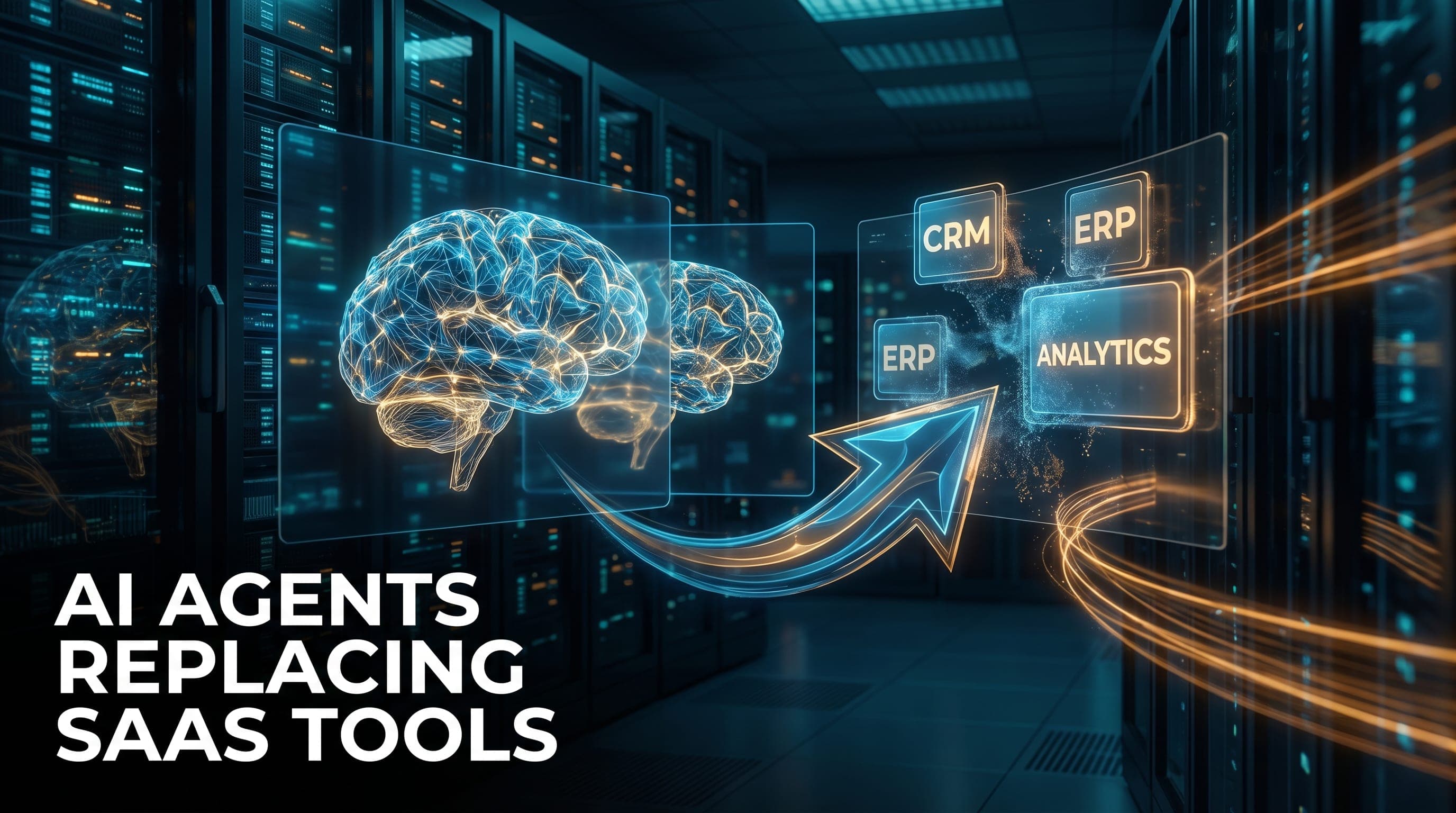
By 2026, the landscape of software as a service (SaaS) is set to transform dramatically, with AI agents poised to replace a significant number of traditional SaaS tools. According to a recent projection, at least 50% of the SaaS tools currently in use will be replaced by intelligent AI agents, marking a pivotal shift in how businesses operate. This change is not theoretical—it's already happening and is backed by substantial market corrections, with a staggering $285 billion shift anticipated in the coming months. Businesses must understand the implications of AI agents replacing SaaS tools and adapt to this new reality to maintain competitiveness.
The rapid advancements in artificial intelligence have led to the emergence of agentic capabilities that allow AI to handle entire workflows, automating tasks that once required multiple SaaS applications. This not only streamlines operations but also presents significant cost-saving opportunities for organizations. In this article, we’ll explore the impact of AI on SaaS, the tools that are at risk of being replaced, and how businesses can effectively navigate this transition.
You'll learn about the current state of SaaS in 2026, the role of AI agents in transforming business processes, and actionable strategies for adapting to these changes. The future of SaaS software hinges on how well businesses can integrate AI into their operations, and this guide aims to provide the insights needed to stay ahead.
The Rise of AI Agents
The concept of AI agents has evolved beyond mere automation; they are now capable of executing complex tasks with minimal human intervention. According to a recent Gartner report, AI agents are expected to be integrated into 40% of enterprise applications by the end of 2026, a dramatic increase from under 5% in 2025. This growth signifies a shift in how organizations view software solutions—moving from a collection of tools to an integrated agent-based approach.
Market Dynamics and Growth
The SaaS market is projected to reach approximately $315 billion by early 2026, driven by a 20% compound annual growth rate (CAGR). As businesses increasingly recognize the efficiency and cost-effectiveness of AI agents, traditional SaaS tools are expected to lose their dominance. For example, Salesforce, a leading CRM platform, is facing pressure as AI-driven solutions begin to offer more personalized and efficient customer interactions.
Challenges and Opportunities
While the shift towards AI agents presents challenges, such as the need for businesses to re-evaluate their technology stacks, it also offers opportunities for innovation. Companies that embrace this change early can position themselves as leaders in their respective industries. The key will be to identify which SaaS tools are most at risk of being replaced and to strategize accordingly.
AI agents are set to replace at least 50% of the SaaS tools you use today by December 2026.
The Impact of AI on SaaS Tools
AI's transformative impact on SaaS tools is multi-faceted, affecting everything from operational efficiency to user experience. As organizations adopt AI agents, they can expect significant changes in how work is performed, leading to improved outcomes.
Operational Efficiency
AI agents can automate routine tasks that traditionally required multiple SaaS applications, creating a more streamlined workflow. For instance, a marketing team using HubSpot for email marketing, Salesforce for CRM, and Slack for communication might find that a single AI agent can integrate these functions, reducing the need for multiple subscriptions. This not only cuts costs but also simplifies the user experience.
User Experience Enhancement
The integration of AI agents enhances user experience by providing personalized interactions and faster response times. For example, Zendesk’s AI-powered customer service tools are already changing the way businesses engage with customers, allowing for quicker resolution times and more tailored support. As AI tools evolve, they will be better equipped to understand customer preferences and needs, leading to higher satisfaction rates.
54% of CIOs are replacing SaaS with AI agents in 2026, indicating a significant trend towards automation.
SaaS Tools at Risk of Replacement
As AI agents become more capable, certain categories of SaaS tools are more vulnerable to being replaced. Understanding which tools are at risk can help organizations make informed decisions about their technology investments.
CRM Systems
Traditional CRM systems such as Salesforce and Microsoft Dynamics are facing pressure from AI-driven solutions that can automate lead scoring, customer interactions, and data insights. For instance, AI agents can analyze customer behavior patterns and predict future needs without the need for manual input, making older systems less appealing.
Marketing Automation Software
Marketing automation tools like Mailchimp and HubSpot are also at risk. AI agents can execute marketing campaigns, analyze performance metrics, and adjust strategies in real-time, reducing the need for manual oversight. This shift allows marketers to focus on strategy instead of execution.
Project Management Tools
Tools like Asana and Trello, which are used for task management and team collaboration, could be replaced by AI agents capable of managing projects autonomously. These agents can track progress, assign tasks, and even provide updates to stakeholders without human intervention.
By 2026, organizations must prepare for a landscape where traditional SaaS applications are largely supplanted by intelligent AI agents.
The Future of SaaS Software
The future of SaaS software is intertwined with the evolution of AI agents, leading to a reimagining of how software is developed and utilized. The next few years will see a blending of traditional software capabilities with AI-driven functionalities.
Integration of AI Agents in SaaS
SaaS providers are actively seeking to integrate AI capabilities into their platforms. For example, Adobe is enhancing its Creative Cloud suite with AI tools that can automate design processes, making it easier for users to create high-quality content without extensive training. This integration is not just about adding features; it fundamentally changes how users interact with software.
Shift to Subscription Models
The shift towards AI agents may also influence subscription models in SaaS. As businesses increasingly adopt AI-driven tools, they might seek more flexible payment structures that align with usage and outcomes rather than flat-rate monthly fees. This could lead to a rise in pay-per-use models, making it more cost-effective for companies to adopt AI technologies.
The global SaaS market is projected to surge from $266 billion in 2024 to around $315 billion by early 2026, driven by AI advancements.
How AI is Changing SaaS
AI is fundamentally changing the way SaaS operates, leading to more intelligent, adaptive, and personalized solutions. Understanding these changes is crucial for businesses aiming to stay competitive.
Enhanced Decision-Making
AI agents equipped with advanced analytics capabilities can provide businesses with insights that were previously difficult to obtain. For instance, tools like Tableau and Power BI are integrating AI to enhance data visualization and interpretation, allowing users to make informed decisions quickly.
Personalization at Scale
With AI, businesses can offer personalized experiences to customers at scale. For example, Netflix uses AI algorithms to analyze viewing habits and recommend content tailored to individual preferences. This level of personalization was unattainable with traditional SaaS tools, which relied on manual input and generic algorithms.
AI agents can handle entire implementation workflows, transforming how businesses deploy and manage software.
Why Businesses Should Adapt to AI Agents
As the shift towards AI agents accelerates, businesses must adapt to remain competitive. Ignoring this trend could result in falling behind more agile competitors that leverage AI technologies effectively.
Competitive Advantage
Organizations that adopt AI agents early can gain a significant advantage over competitors. By streamlining operations and improving customer interactions, businesses can enhance their market position. For instance, companies leveraging AI-driven insights for decision-making can outperform those relying on traditional methods.
Cost Efficiency
Integrating AI agents can lead to substantial cost savings. For example, businesses can reduce their subscription costs by replacing multiple SaaS tools with a single AI agent capable of executing various functions. This consolidation not only saves money but also simplifies the technology stack.
AI agents are not just an upgrade; they represent a fundamental shift in how businesses operate.
Actionable Steps for Adapting to AI Agents
Adapting to the rise of AI agents requires strategic planning and execution. Here are actionable steps for businesses to consider:
Evaluate Current Tools
Begin by assessing the SaaS tools currently in use. Identify which tools are most vulnerable to replacement by AI agents and consider alternatives that incorporate AI functionalities. This evaluation will help prioritize investments in new technologies.
Invest in Training
As AI agents become more prevalent, investing in training for employees will be crucial. Ensure that teams are equipped with the skills needed to work alongside AI technologies effectively. This may involve upskilling initiatives or hiring experts in AI implementation.
Monitor Industry Trends
Stay informed about developments in the AI landscape. Subscribe to industry publications, attend conferences, and engage with thought leaders to keep abreast of new solutions that could impact your business. This proactive approach will help organizations adapt swiftly to changes.
To remain competitive, businesses must embrace the integration of AI agents into their operations.
Conclusion
As we move through 2026, the integration of AI agents into business operations will redefine the SaaS landscape. Companies that embrace this shift will not only enhance their efficiency but also position themselves for future growth. Those that resist change risk falling behind in a rapidly evolving marketplace. The time to act is now—evaluate your current tools, invest in AI training, and stay informed about industry trends. The future of SaaS is not just about software; it's about intelligent agents that can transform how we work.

Okafor Samson
Okafor Samson is a Staff Writer at SaasAudited, specializing in data-driven SaaS reviews and industry analysis. With a background in technology journalism and digital marketing, he brings extensive experience from previous roles in tech startups and B2B publications, delivering insightful content that empowers businesses to make informed software decisions.