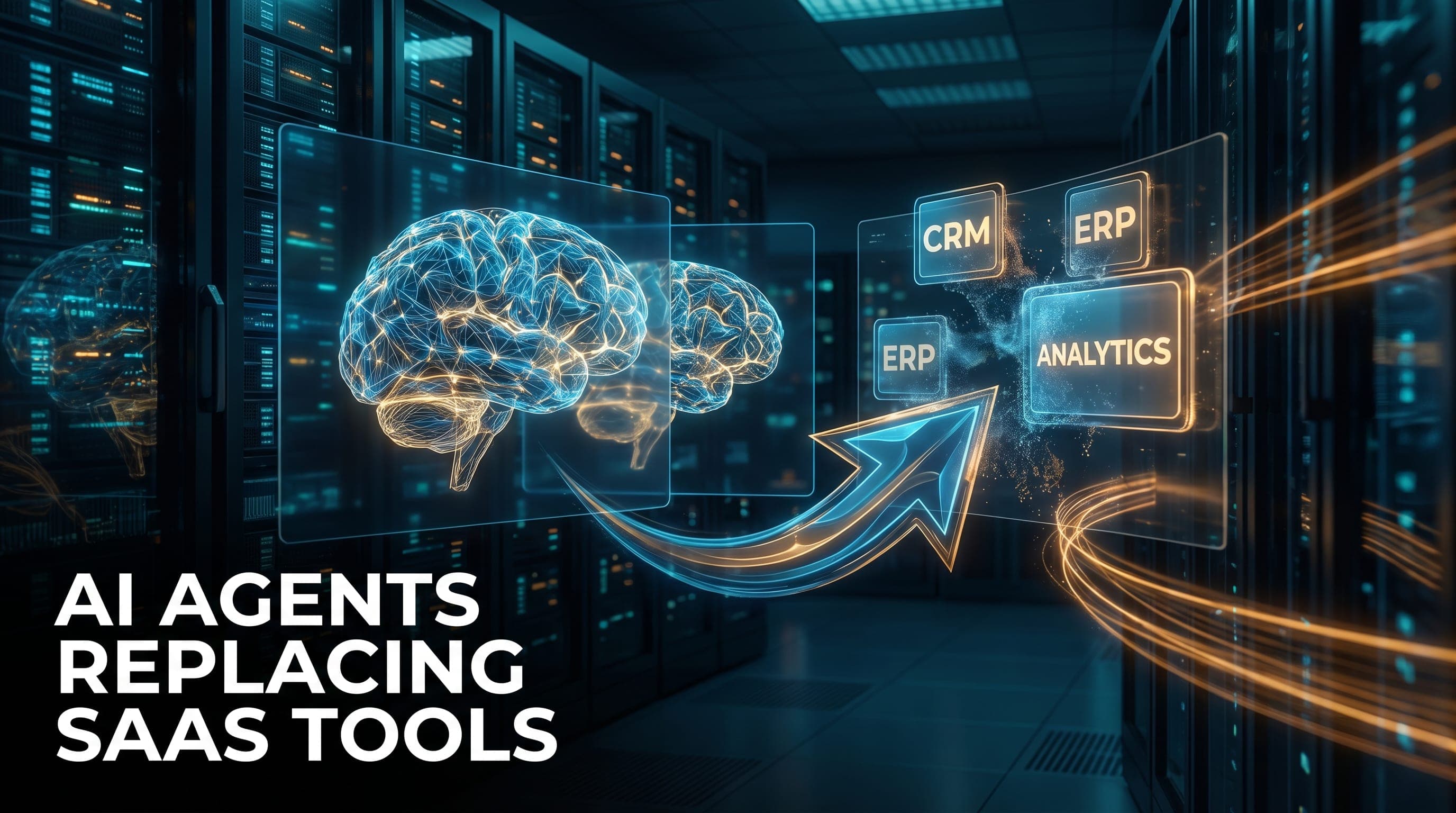
AI Agents Replacing SaaS Tools: The Next Big Shift in Software
Discover how AI agents are replacing SaaS tools in 2026 and what it means for software investments and strategies.

By 2026, AI agents are set to transform the software landscape in ways we never anticipated. According to a recent Gartner report, 40% of enterprise applications will feature task-specific AI agents, a staggering jump from less than 5% just a year prior. This rapid evolution isn't merely a trend; it's a fundamental shift that could redefine how businesses operate and invest in technology. With predictions suggesting that by December 2026, at least 50% of current SaaS tools may be replaced by AI agents, decision-makers must consider the implications of this shift on their software strategies.
The implications of AI agents replacing traditional SaaS tools span across various business functions, from operational efficiency to cost management. As companies pivot towards AI-driven solutions, understanding how to adapt to AI in SaaS becomes crucial. This article will explore the impact of AI on SaaS, the future of SaaS in 2026, and actionable strategies for businesses looking to navigate this evolving landscape.
What do you need to know about the business implications of AI agents? How can you ensure that your investments align with this new paradigm? We'll break down the trends, provide comparisons of tools, and offer insights on how to position your organization for success in this AI-driven future.
The Impact of AI on SaaS: A Transformational Shift
AI isn't just an enhancement to existing SaaS tools; it is fundamentally changing how software solutions are created and utilized. The integration of AI agents into enterprise applications is expected to lead to significant efficiency gains. For instance, AI agents can automate repetitive tasks, analyze data in real-time, and provide insights that were previously unattainable.
Efficiency Gains and Cost Reductions
Companies adopting AI agents have reported remarkable efficiency gains. For example, organizations using AI for customer service have seen response times cut by over 60%, leading to improved customer satisfaction and loyalty. A study by McKinsey indicates that companies leveraging AI tools could improve productivity by up to 40% by 2026. This translates into substantial cost savings and the ability to reallocate resources towards more strategic initiatives.
AI Agents vs. Traditional SaaS: A Comparison
To understand the shift, consider the differences between traditional SaaS tools and AI-driven solutions. Traditional SaaS tools often require manual input and management, whereas AI agents learn and adapt over time. This adaptability allows AI agents to handle complex tasks without human intervention, significantly reducing the need for extensive training and onboarding.
Real-World Examples of AI Integration
Companies like Salesforce are already integrating AI into their platforms. Salesforce Einstein, for instance, offers predictive analytics and personalized recommendations, showcasing how AI can enhance traditional CRM functionalities. As AI continues to evolve, it is likely that we will see even more sophisticated integrations that can replace entire suites of SaaS tools.
The impact of AI on SaaS is not just an upgrade; it’s a complete transformation of how software is developed and used. - Maya Chen
The Future of SaaS in 2026: What to Expect
As we look towards the future, the SaaS landscape will be markedly different. By 2026, the reliance on AI agents will dramatically reshape software offerings. According to a study by Deloitte, companies are already experimenting with AI integration, signaling a shift away from traditional SaaS models.
Market Predictions and Trends
Analysts predict that the SaaS market will experience a significant contraction, with AI agents replacing various tools. This year alone, AI agents have wiped $285 billion from software stocks, and analysts expect this trend to continue as organizations prioritize AI-driven functionality over traditional software. The Gartner report highlights that by 2030, the majority of enterprise applications will be AI-driven, fundamentally changing the market dynamics.
Investment Strategies Moving Forward
For decision-makers, adapting investment strategies to align with these trends is crucial. Companies should look to invest in AI-enabled platforms that offer flexibility, scalability, and advanced analytics. Tools like HubSpot, which integrates AI for marketing automation, and Slack, with its AI-enhanced communication features, are examples of platforms that are embracing this shift.
Challenges and Considerations
Despite the promising outlook, transitioning to AI agents comes with its challenges. Organizations must consider data security, integration complexities, and the potential need for new skill sets within their teams. A proactive approach to training and development can mitigate these challenges and ensure a smooth transition to AI-driven solutions.
By 2026, the market will not only shift towards AI solutions but will also redefine how businesses interact with technology. - Maya Chen
SaaS Transformation with AI: Key Drivers
The transformation of SaaS through AI is driven by several key factors, including the demand for efficiency, data-driven decision-making, and the need for personalization. As organizations navigate the complexities of digital transformation, AI agents present a compelling solution.
Efficiency and Automation at Scale
AI agents enable businesses to automate processes at scale, eliminating the need for manual oversight in numerous tasks. For example, companies using AI for supply chain management have reported up to a 50% reduction in operational costs by automating procurement and inventory processes.
Data-Driven Insights and Personalization
With AI’s ability to analyze vast amounts of data quickly, organizations can derive insights that inform strategic decision-making. Companies like Netflix utilize AI algorithms to analyze viewer preferences, enabling them to deliver personalized content recommendations that enhance user engagement.
Competitive Advantage through Innovation
Organizations that adopt AI-driven solutions not only enhance efficiency but also gain a competitive advantage in their respective markets. According to a report by IDC, businesses that integrate AI into their operations are 2.5 times more likely to achieve significant financial benefits than those that do not.
A SaaS transformation with AI is not just about technology; it’s about rethinking business processes entirely. - Maya Chen
How to Adapt to AI in SaaS: Actionable Steps
Adapting to AI in the SaaS landscape requires a strategic approach. Here are actionable steps that decision-makers can take to ensure their organization remains competitive in the evolving market.
Evaluate Current Toolset
Start by assessing your current software tools. Identify which tools are essential and which can be replaced with AI agents. This evaluation will help prioritize investments and streamline operations.
Invest in AI Training
To maximize the potential of AI tools, invest in training programs for your team. This will ensure that employees are equipped to leverage AI capabilities effectively and can adapt to new workflows seamlessly.
Explore AI Partnerships
Consider partnering with AI solution providers that can offer tailored solutions for your business. Companies like IBM and Microsoft provide AI services that can enhance existing SaaS offerings and facilitate a smoother transition to AI-driven technology.
Adapting to AI in SaaS is essential for future success; organizations must proactively embrace this change. - Maya Chen
Business Implications of AI Agents
The rise of AI agents carries significant business implications that extend beyond mere operational efficiency. Companies are witnessing a paradigm shift in how they interact with technology and customers.
Changing Workforce Dynamics
As AI agents take on more tasks traditionally performed by humans, the workforce dynamics are shifting. Organizations must rethink their talent strategies, focusing on reskilling employees to work alongside AI rather than replacing them.
Customer Engagement and Experience
AI agents enhance customer engagement by providing personalized experiences and immediate assistance. Businesses leveraging AI-driven customer service tools, like Zendesk's AI capabilities, have improved customer satisfaction scores by over 20% in recent studies.
Financial Performance and Growth
Investing in AI agents can lead to improved financial performance. According to a report by Forrester, companies that have adopted AI technologies have seen revenue growth rates increase by an average of 20% over three years.
The business implications of AI agents extend beyond efficiency; they redefine customer relationships and workforce dynamics. - Maya Chen
SaaS Investment Strategies for 2026
As the landscape evolves, organizations must refine their SaaS investment strategies to leverage the benefits of AI agents effectively. Here are key strategies to consider.
Focus on Scalability
Invest in AI solutions that offer scalability to accommodate future growth. Platforms like AWS and Azure provide scalable AI services that can adapt to changing business needs without significant downtime or costs.
Prioritize Interoperability
Choose AI tools that can easily integrate with existing systems. This will reduce friction during implementation and enhance overall operational efficiency. Tools like Zapier enable seamless integrations across various applications, facilitating a smoother transition to AI-driven solutions.
Monitor Market Trends
Stay informed about market trends and emerging technologies. Subscribing to industry reports and attending conferences can provide valuable insights into future developments in AI and SaaS.
Investing in SaaS in 2026 requires a forward-thinking approach that prioritizes scalability, interoperability, and market awareness. - Maya Chen
Conclusion: Preparing for the Future of Software
The shift from traditional SaaS to AI agents is not just on the horizon; it’s already underway. As we move towards 2026, decision-makers must prepare for a landscape where AI tools dominate the software market. The implications of this shift are vast, affecting everything from operational efficiency to customer engagement.
To position your organization for success, evaluate your current software tools, invest in AI training, and explore partnerships with AI solution providers. Embrace the changes that AI brings, and leverage these technologies to enhance your competitive edge. The future of software is here, and those who adapt will thrive.

Okafor Samson
Okafor Samson is a Staff Writer at SaasAudited, specializing in data-driven SaaS reviews and industry analysis. With a background in technology journalism and digital marketing, he brings extensive experience from previous roles in tech startups and B2B publications, delivering insightful content that empowers businesses to make informed software decisions.