AI Agents in SaaS: Transforming Software Solutions for 2026
Discover how AI agents in SaaS are reshaping software solutions and giving businesses a competitive edge in 2026.

By 2026, AI agents in SaaS are not just buzzwords—they represent a seismic shift in how software solutions operate. Recent forecasts suggest that AI agents will be integrated into 40% of enterprise applications, up from under 5% just a year earlier, fundamentally altering the way businesses leverage technology. This transformation will not only streamline workflows but also redefine productivity and user experience.
The advent of AI agents is set to disrupt traditional SaaS tools that have long been the backbone of enterprise operations. As organizations rush to adopt these intelligent systems, the question arises: how can businesses harness this technology for a competitive advantage? In this article, we'll explore the burgeoning synergy between AI agents and conventional SaaS solutions, the impact of AI on SaaS, and actionable strategies for leveraging this transformation.
From automating mundane tasks to enhancing decision-making capabilities, AI agents are pivotal to the SaaS transformation in 2026. Companies that adapt early will not only improve efficiency but also gain insights that were previously unattainable. Ready to dive into the future of SaaS with AI? Let's examine the implications and opportunities that lie ahead.
The Synergy Between AI Agents and SaaS
The integration of AI agents into SaaS tools signifies a new era where software solutions are no longer passive tools but active participants in business processes. AI agents can navigate multiple SaaS applications, automate workflows, and provide synthesized outputs, enhancing productivity.
Understanding AI Agents
AI agents are intelligent systems capable of performing tasks autonomously. They utilize machine learning algorithms to learn from data and improve their performance over time. By 2026, these agents are expected to become prevalent in SaaS environments, allowing for optimized workflows and decision-making.
Benefits of AI Agents in SaaS
- Automation: AI agents can automate repetitive tasks, freeing up human resources for more strategic initiatives.
- Enhanced Decision-Making: By analyzing data from various sources, AI agents can provide insights that help businesses make informed decisions.
- Increased Efficiency: Integrating AI agents reduces the time spent on manual processes, leading to faster turnaround times.
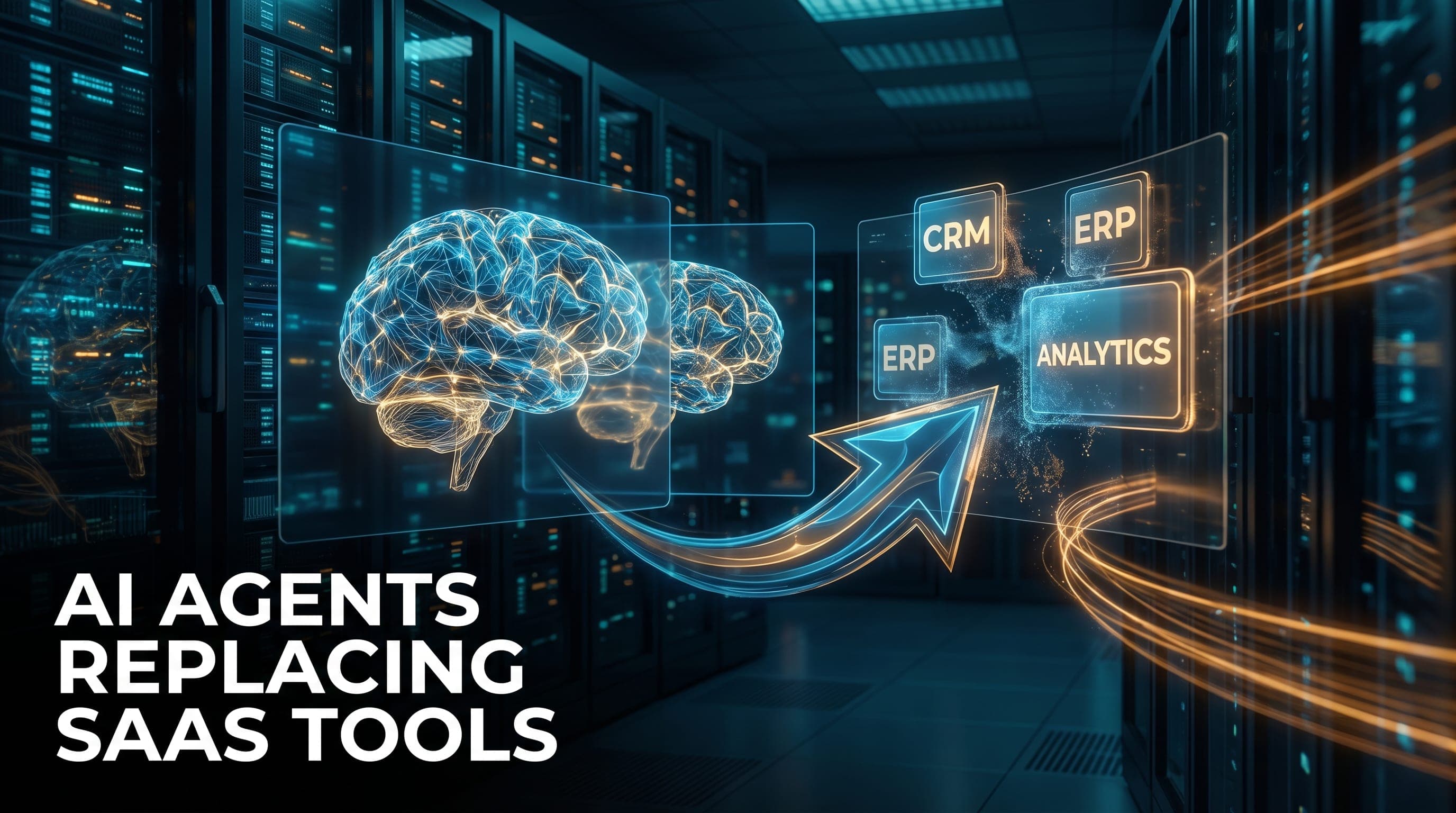
By 2026, AI agents are predicted to replace at least 50% of the SaaS tools currently in use, fundamentally reshaping the software landscape.
The Impact of AI on SaaS
The influence of AI on SaaS is profound and multifaceted. Gartner predicts that by 2028, 33% of enterprise software applications will incorporate agentic AI features. This shift will not only change how software is developed but also how organizations interact with these tools.
Market Growth and Trends
The global AI SaaS market is anticipated to witness substantial growth, projected to reach $775.44 billion by 2031, growing at a CAGR of 38.28% from $71.54 billion in 2023. This rapid expansion indicates a strong demand for AI-integrated solutions, reflecting a shift in customer expectations and technology capabilities.
Challenges and Considerations
While the benefits of AI agents are significant, there are challenges to consider. Data privacy concerns, integration complexities, and the necessity for upskilling staff are just a few hurdles organizations may face when implementing AI solutions.
The transition to AI-integrated SaaS tools requires careful planning and execution, as companies must navigate both technical and operational challenges.
How AI is Changing SaaS Tools
AI is fundamentally altering the functionality and usability of SaaS tools. Traditional software often relies heavily on user input, while AI-driven solutions can adapt and learn from user behavior to enhance user experience.
Real-Time Analytics and Insights
AI agents enable real-time data analysis, providing businesses with up-to-the-minute insights that can inform strategy. For example, Salesforce's Einstein AI utilizes machine learning to deliver personalized recommendations based on user activity, dramatically improving customer engagement.
Personalization and User Experience
Personalization is no longer a luxury; it's an expectation. AI agents can tailor experiences based on user history, preferences, and behavior. HubSpot's AI-powered tools, for example, analyze customer interactions to suggest tailored marketing strategies that yield higher conversion rates.
AI is shifting SaaS tools from static applications to dynamic systems that evolve with user needs, enhancing overall effectiveness.
Case Studies of AI Agents in SaaS
Real-world applications of AI agents demonstrate their transformative potential within SaaS. Companies across various industries are leveraging these technologies to enhance efficiency and drive growth.
Case Study 1: Slack and AI Integration
Slack has integrated AI features that allow users to automate tasks, schedule meetings, and manage workflows through conversational interfaces. By implementing AI agents, Slack has improved user productivity by 30%, showcasing the power of AI in streamlining communications.
Case Study 2: Zendesk's AI-Powered Support
Zendesk has incorporated AI agents to manage customer inquiries and support tickets. This has resulted in a 40% reduction in response times and has allowed human agents to focus on more complex issues, thereby increasing overall customer satisfaction.
These case studies highlight the efficiency gains and improved customer experiences that AI agents can deliver across various SaaS platforms.
Checklist for Implementing AI Agents in SaaS
Adopting AI agents requires strategic planning and execution. Here’s a checklist to guide organizations through the implementation process:
- Assess Current Workflows: Identify repetitive tasks that can be automated.
- Choose the Right AI Tools: Evaluate tools like Microsoft Azure AI and IBM Watson that best fit your organization’s needs.
- Train Your Team: Invest in training staff to work effectively with AI tools.
- Establish Data Governance: Ensure data privacy and compliance with regulations.
Following a structured approach to implementation can significantly enhance the effectiveness of AI agents in SaaS.
Myths About AI in SaaS
Myth 1: AI Will Replace All Human Jobs
While AI can automate tasks, it is not designed to replace human workers entirely. Instead, it augments human capabilities, allowing employees to focus on higher-value tasks.
Myth 2: AI Implementation is Too Complex and Expensive
Many AI solutions are becoming more accessible and affordable. Platforms like Notion and Airtable have integrated AI capabilities that can be implemented with minimal investment and technical expertise.
Dispelling these myths can help organizations embrace AI technology and leverage its full potential.
The Future of SaaS with AI
The future of SaaS is undoubtedly intertwined with AI technologies. As organizations increasingly adopt AI agents, the software landscape will continue to evolve, making traditional models obsolete.
Predictions for 2026 and Beyond
Experts predict that by 2030, 35% of point-product SaaS tools will be replaced by AI agents, fundamentally reshaping the SaaS model. This shift will demand that businesses rethink their technology strategies to stay competitive.
Strategic Recommendations
To thrive in an AI-driven SaaS landscape, organizations should focus on:
- Innovation: Continuously explore and invest in AI technologies.
- Collaboration: Foster a culture of collaboration between AI and human teams.
- Adaptability: Stay agile and willing to pivot as new AI capabilities emerge.
The future of SaaS is bright for those who embrace AI agents, as they will redefine productivity and operational efficiency.
Conclusion
The integration of AI agents in SaaS is not just a trend; it’s a transformative force shaping the future of software solutions. Businesses that leverage this technology stand to gain a significant competitive advantage. Start exploring AI tools today and prepare for a future where software solutions are not only smarter but also more aligned with your organizational goals. The journey towards AI integration in SaaS requires careful planning, but the rewards are substantial. Don’t wait—begin your transformation now.

Maya Chen
Maya Chen is a Staff Writer at SaasAudited with a keen focus on SaaS product analysis and technology trends. With a background in software development and data analytics, she brings a unique perspective to her reviews, drawing on her experience as a former tech consultant and analyst.